Security: what a copier or printer keeps on its drive
A networked copier or multifunction printer runs its own software and keeps its own storage. This page sets out what that storage holds, the checks to ask a provider, and what should happen to the drive when the machine goes back.
A copier keeps a record of its work
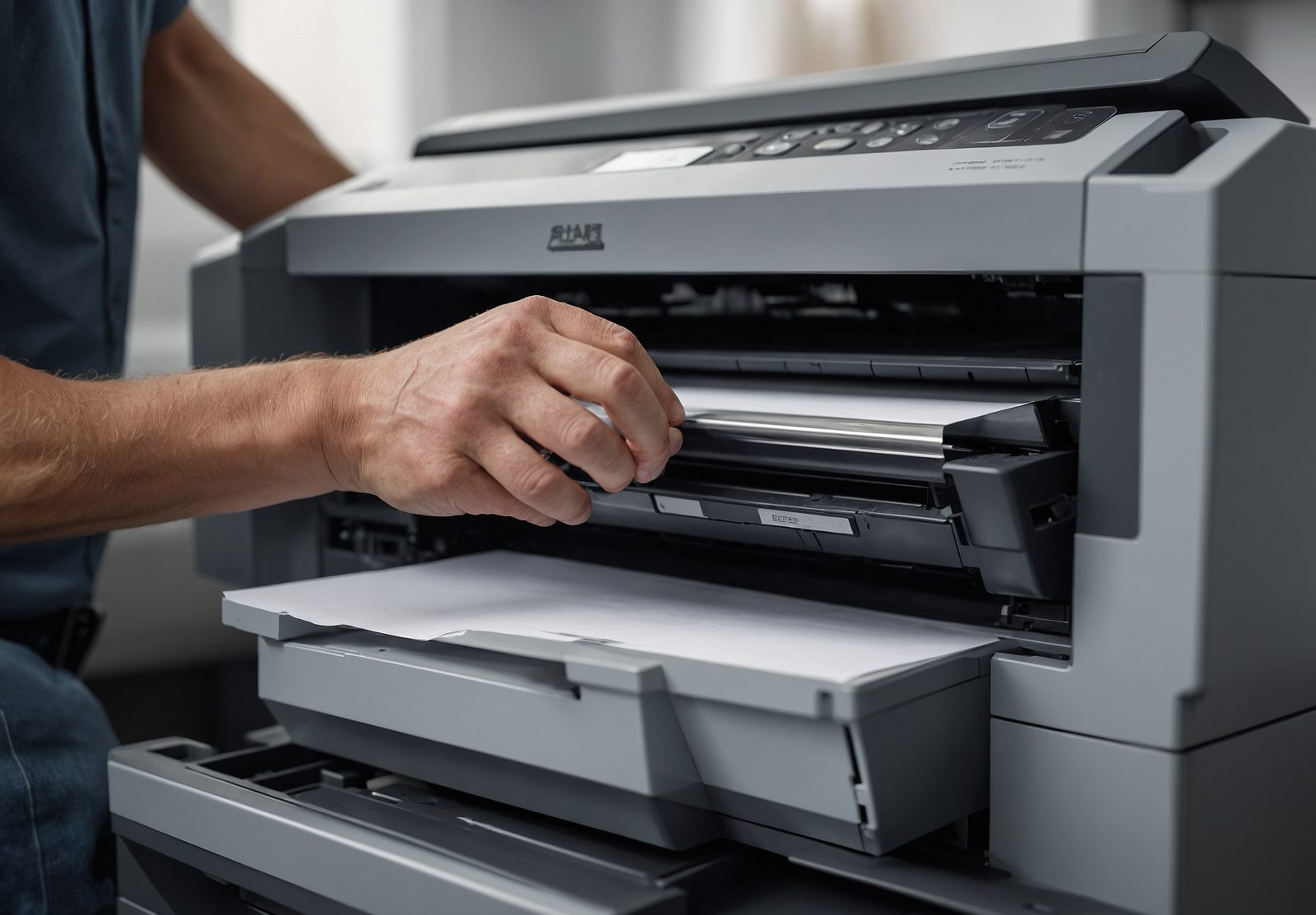
A networked copier or multifunction printer keeps a record of what it copies, prints, scans, faxes and emails on its own hard drive. The Federal Trade Commission makes this point in its guide to digital copier data security, and that federal guidance applies in Massachusetts and New Hampshire alike. The record is not one file. It can hold a scanned form, a print job that sat in the output tray, and the address a document was sent to, so a shared office machine can carry the same personal details as the paperwork around it.
This page covers four things: what the machine stores and where, who can reach that storage, how output and scans should be handled, and what happens to the drive when a lease ends or the machine is sold. We wrote it for the person who signs or approves the paperwork, and for the office manager who lives with the machine. The legal duties that can follow from holding personal data sit on the compliance page. This page stays with the machine itself.
Three figures to carry into a contract talk
Consumables and output: what touches the record, and what does not
Questions for the dealer before the machine arrives
None of these questions needs a technician to ask. Each one can be answered in writing before a rental, lease or purchase is signed, and the answers belong in the contract or in a schedule attached to it.
- Does the machine have an overwrite feature and an encryption feature, and are both switched on when it is delivered?
- Who sets the schedule for overwriting the whole drive, and will it run at least once a month?
- Can the machine hold scans and print jobs until a user logs in, and is secure print release part of the setup?
- Who can reach the drive during repairs, and is that access written into the service agreement?
- How are firmware updates delivered, and who approves them before they reach the machine?
- When the lease ends, who overwrites or removes the drive, and which edition of NIST SP 800-88 does the certificate cite?
A dealer who cannot answer these in writing has given you an answer worth weighing before you sign.